
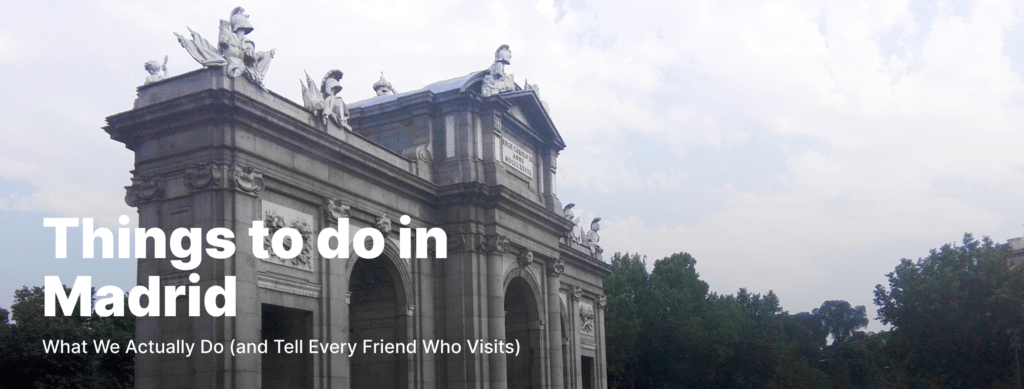
I didn’t really get Madrid until I stopped visiting it.
I’d been a handful of times before I moved here. And my honest impression was: hot, busy, overwhelming. A capital city doing capital city things. I liked it fine. I didn’t love it.
Then we moved nearby, and I started seeing it differently. After some time, you stop looking for the Instagram highlight reel version and start noticing the actual thing that’s in front of you.
That’s the Madrid I want to tell you about.
My husband Pep is Spanish, which means I have a built-in tour guide who grew up understanding instinctively how this country works — when to eat, where to go, what to skip, and why the places that tourists queue for aren’t always the places worth queuing for. This guide is what we tell every friend who visits us and asks “so what should I actually do?”
Some of the famous things are famous for a reason. And some of them are exactly as disappointing as you’d expect. We’ll tell you which is which.
📍 Save this! Get our curated Google Maps list with all of our favorite spots in Madrid — parks, museums, monuments, and a few hidden gems that aren’t mentioned in this article.
The big monuments: What’s worth your time (and what isn’t)
Let’s get this out of the way first, because you’re probably going to visit some of these regardless of what we say. And honestly, some of them deserve it.
The Royal Palace (Palacio Real)
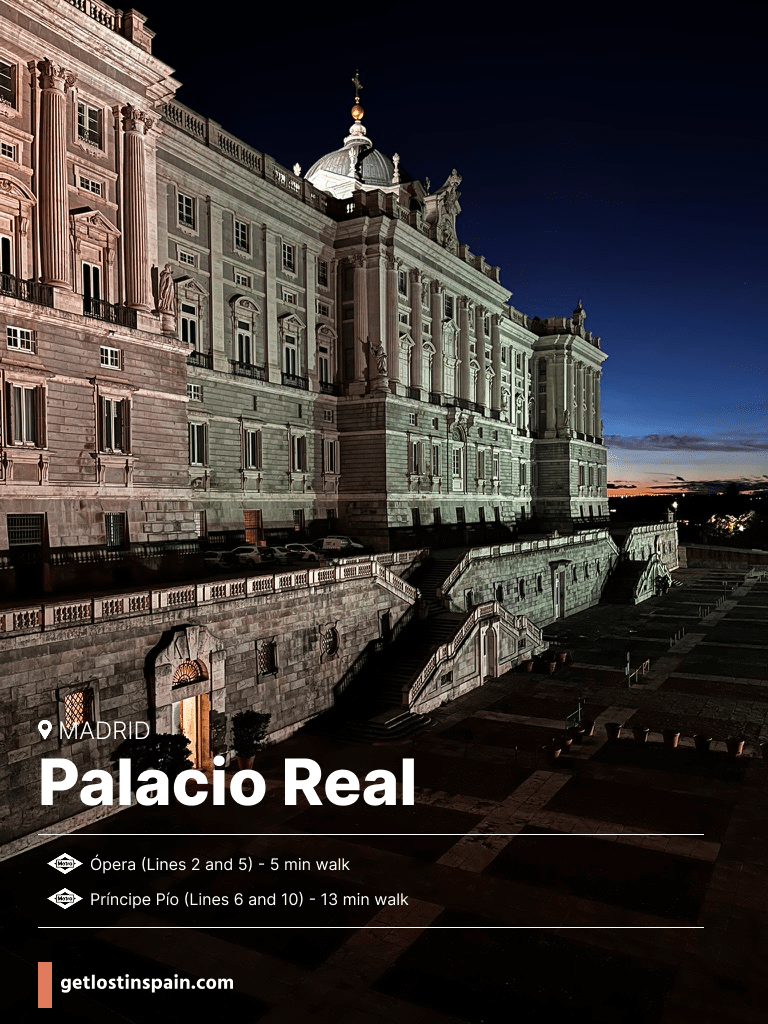
What’s there: One of Europe’s largest royal palaces, with an art gallery with pieces by Carvaggio, Velazquez, and Goya.
What it costs: You can pay to get into the palace (self-guided tickets start at 18 euros). Or, you can enjoy the beautiful architecture from the outside for free!
Yes, the Royal Palace is definitely worth seeing. But here’s what nobody mentions: the Sabatini Gardens and Campo de Moro park surrounding it are gorgeous, with great views of the palace. The gardens are almost always quieter than the palace itself. And best of all, they’re free to enter!
When the weather is nice, and if you’re not interested in paying entry and touring the interior, the gardens give you the architecture, the scale, and a genuinely peaceful hour without the crowds.
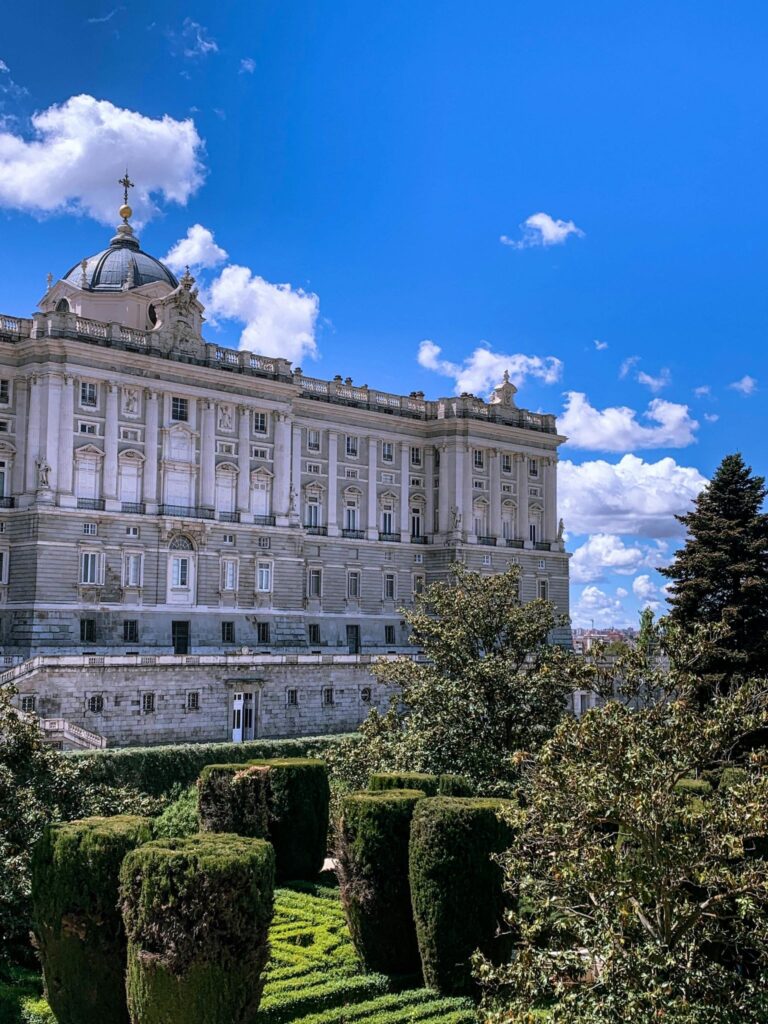
Caption: The view of the palace from the Sabatini Gardens.
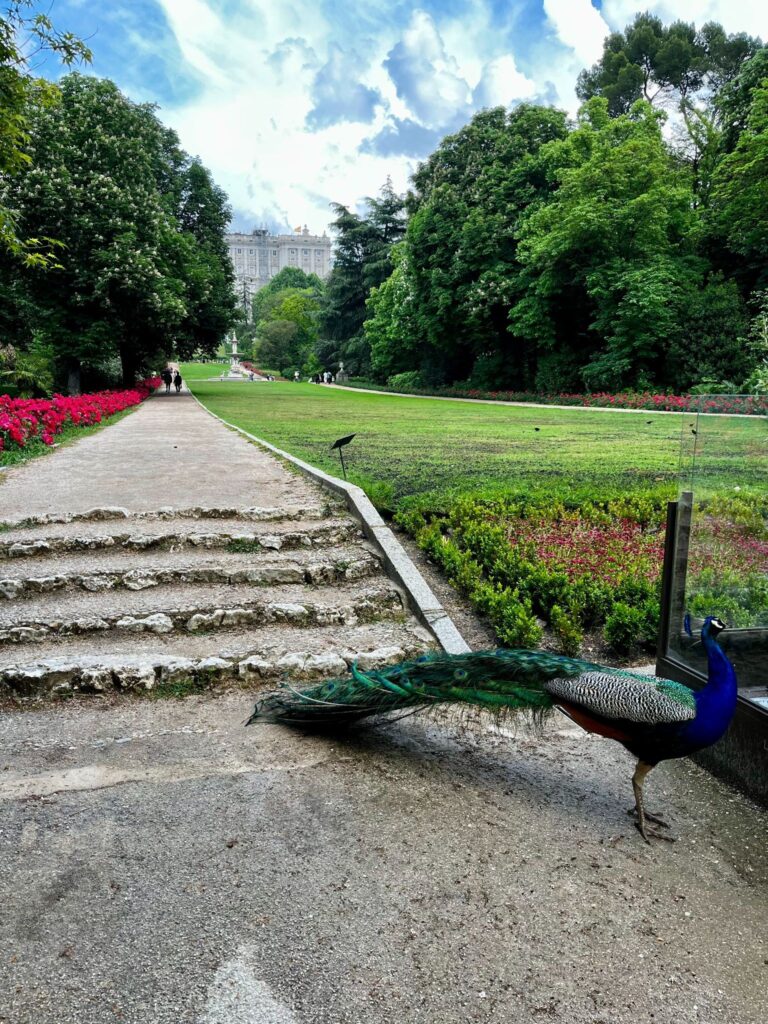
(This is Pep’s recommendation whenever anyone asks.)
Plaza Mayor
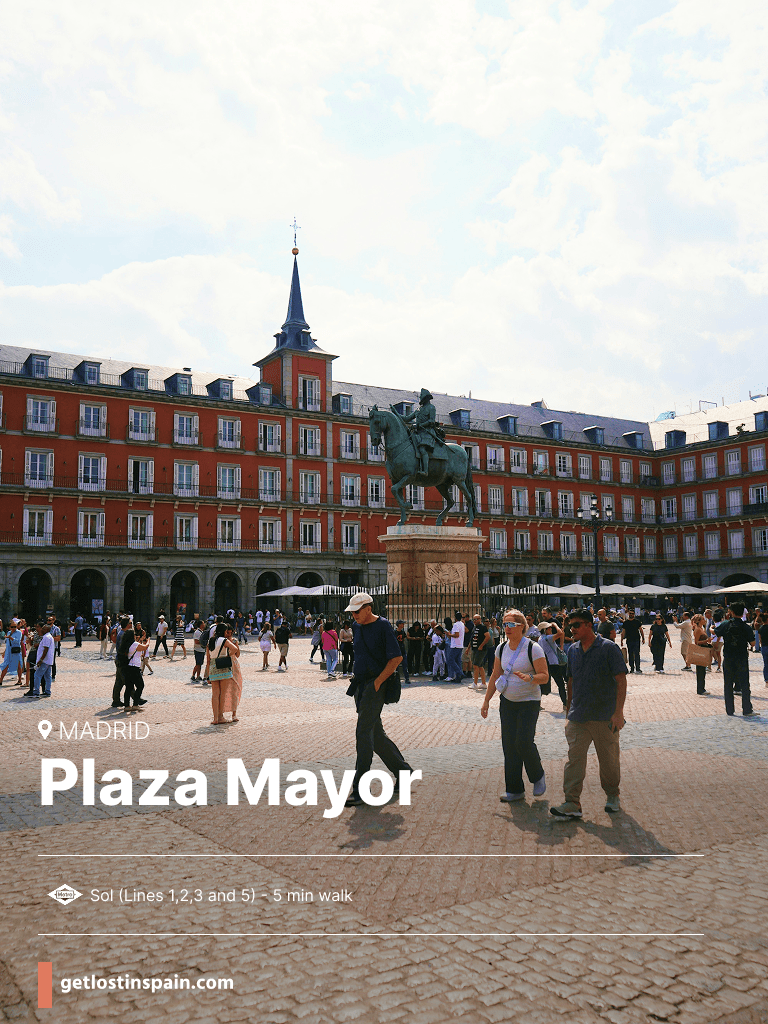
What’s there: It’s known as the main town square of Madrid, an impressive square surrounded by beautiful architecture and archways.
What it costs: Free to visit
Plaza Mayor is one of those places that’s genuinely impressive, architecturally. But to me, this no longer feels like classic Madrid. It feels like it’s been reshaped for tourists.
If you’re nearby, I’d still say go, walk around, have a coffee and sit with it for a while.
But the moment someone approaches you with a menu and a warm smile and asks if you’d like to sit down for lunch, walk away. The restaurants on Plaza Mayor are, without exception, tourist traps. Overpriced, mediocre, and catering to people who don’t know better.
You know better now.
Puerta del Sol
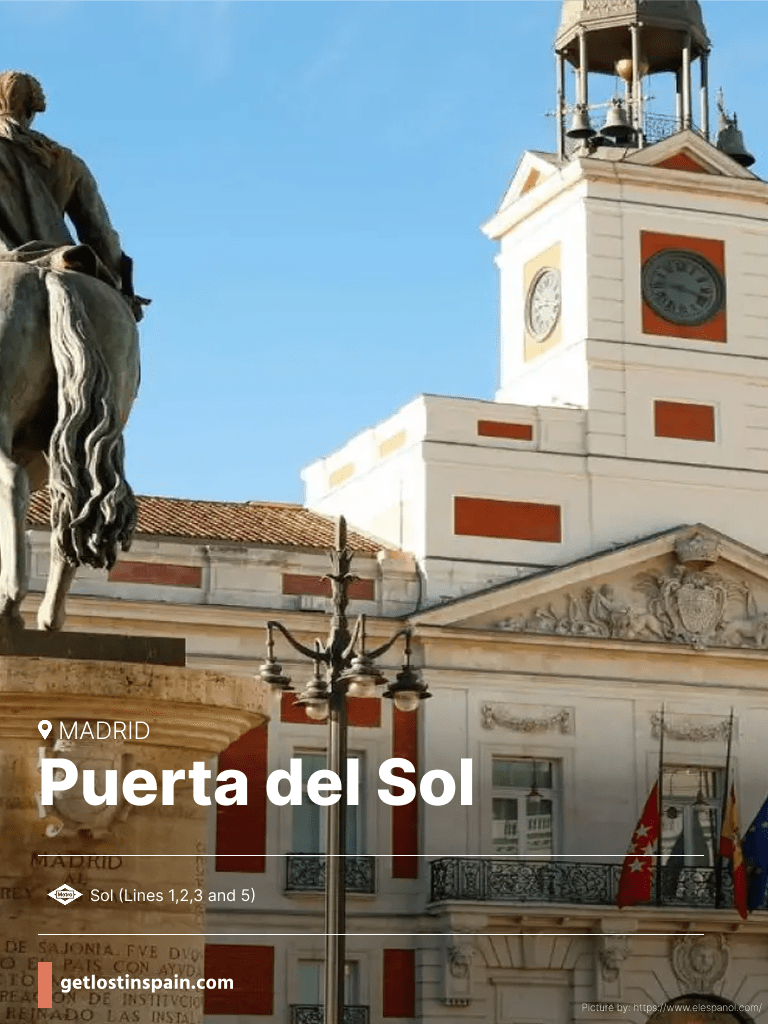
What’s there: Another main square, but arguably less interesting than the Plaza Mayor.
What it costs: Free to visit
Puerta del Sol is one we feel a little bad about, because there’s a version of it that meant something. Pep remembers it differently — it used to have a certain energy, a sense of being at the center of something.
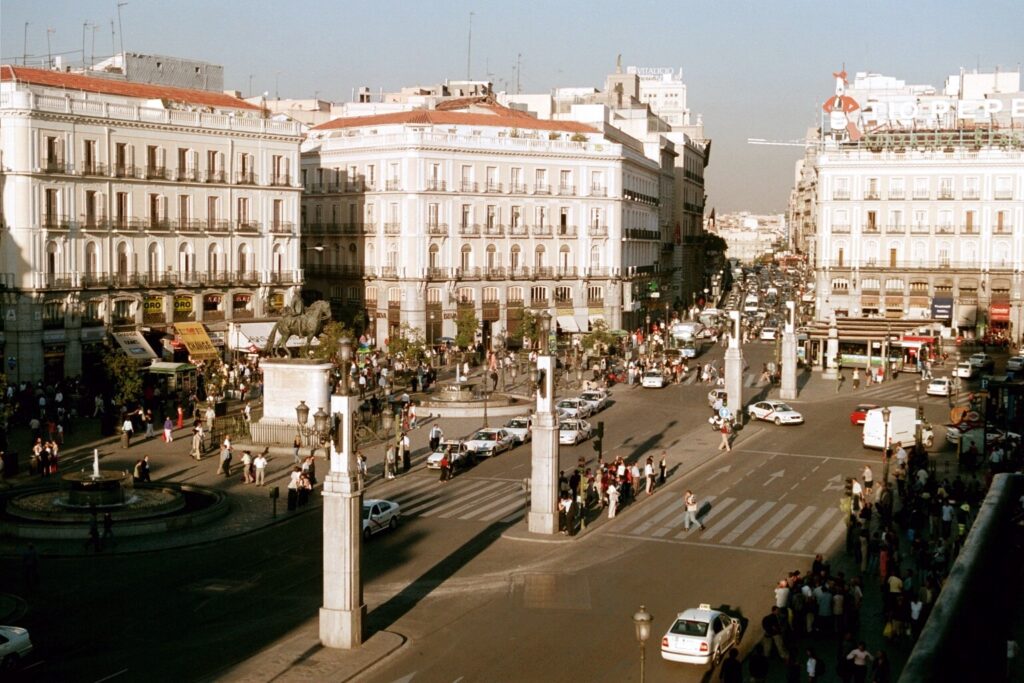
Source: Wikipedia
Now it’s a concrete plaza in the middle of summer with a clock, a bronze bear, and a lot of people who exactly aren’t sure why they came.
The Kilometre Zero marker in the ground is legitimately cool: all of Spain’s roads measure their distance from this exact spot. It’s worth 30 seconds of your attention if you’re nearby. Then move on.
The Prado Museum (Museo Nacional del Prado)
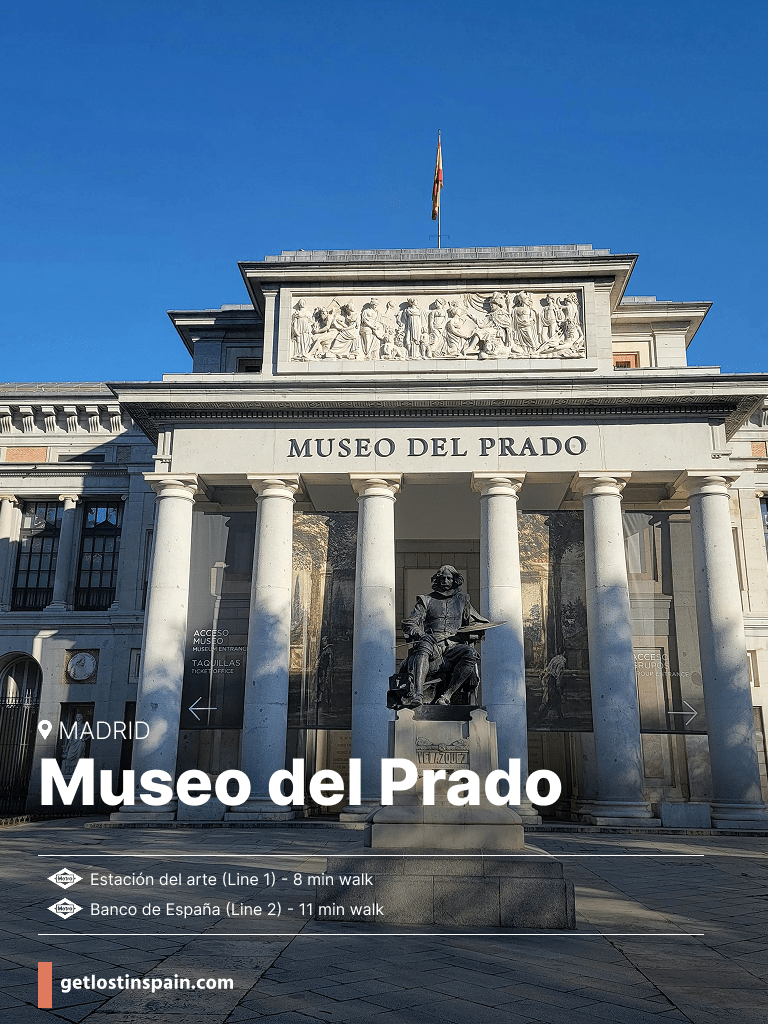
What’s there: The Prado is one of those museums that actually justifies the hype — think Velázquez, Goya, El Greco, and enough Bosch to give you strange dreams.
What it costs: General admission is 15 euros. But you can go for free Monday-Saturday after 6pm, or Sunday after 5pm.
If you only go to one museum in Madrid, make it this one. Take advantage of the free time slots, and plan what you want to see in advance. Or, just enjoy the feeling of wandering these halls and seeing some incredible art displays.
More things to see in Madrid: If you’re interesting in seeing more museums in Madrid, check our ultimate list of things to do in Madrid in Google Maps. We added a few of our favorites.
The Temple of Debod
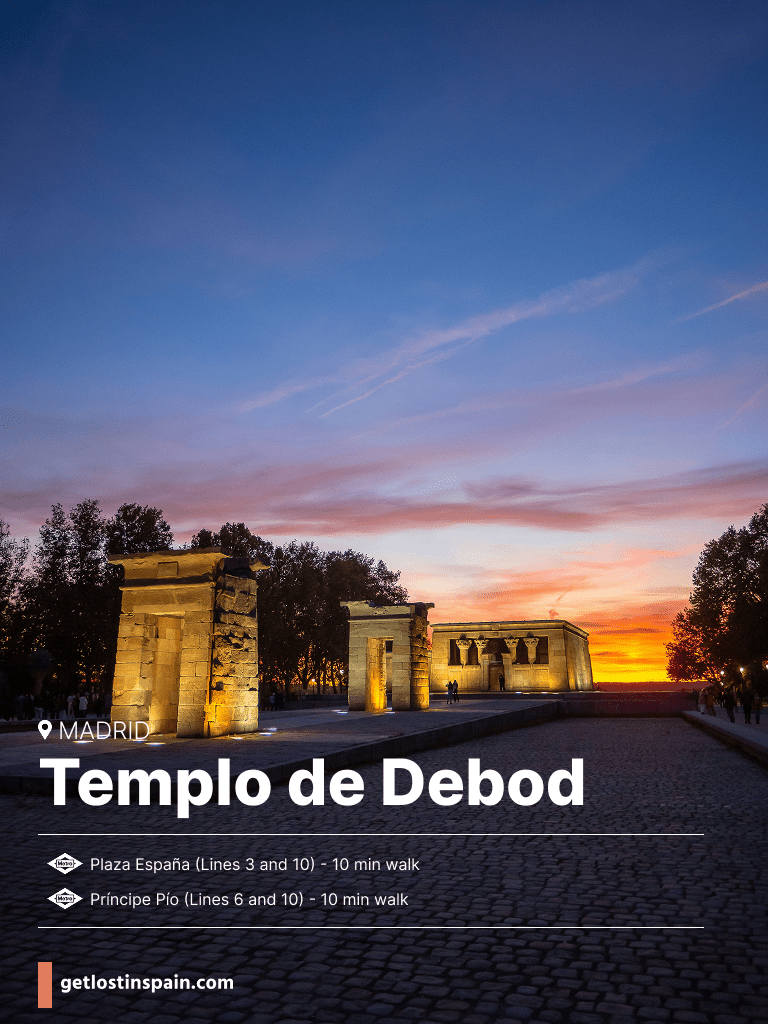
What’s there: An ancient Egyptian temple. In Madrid. No, I’m not making this up.
What it costs: Free!
The Temple of Debod is the one that genuinely surprises people. This 2nd century BC Egyptian temple was gifted to Spain in the 1960’s. They literally dismantled, transported, and rebuilt this thing in a park in the middle of Madrid.
Go at sunset. The light hits from behind, and it looks incredibly cool. Pep and I stumbled into an accidental perfect evening there once — we picked up pizza by the slice from a place near the area of Opera, walked over, ate on the grass while the sun went down over the city.
It’s the kind of thing that doesn’t make it onto lists but ends up being what you remember.
The barrios: Where Madrid’s real personality lives
If the monuments tell you what Madrid is, the barrios tell you who it is. And this is where most visitor guides completely fall short. They mention a neighbourhood name and move on, as if “walk around Malasaña” is a recommendation rather than a starting point.
Here’s actually what to expect.
Chamberí
Chamberí is Pep’s default for a relaxed morning, and once you’ve been, you’ll understand why. It’s posh without being sterile. The kind of neighbourhood where people are actually living their lives rather than performing them for Instagram.
There’s a concentration of specialty coffee shops and good independent bookstores that make for an easy few hours with no particular agenda.
We recently ended up at Rebel Coffee, which was fantastic with great vibes (and they have bagels! Score!).
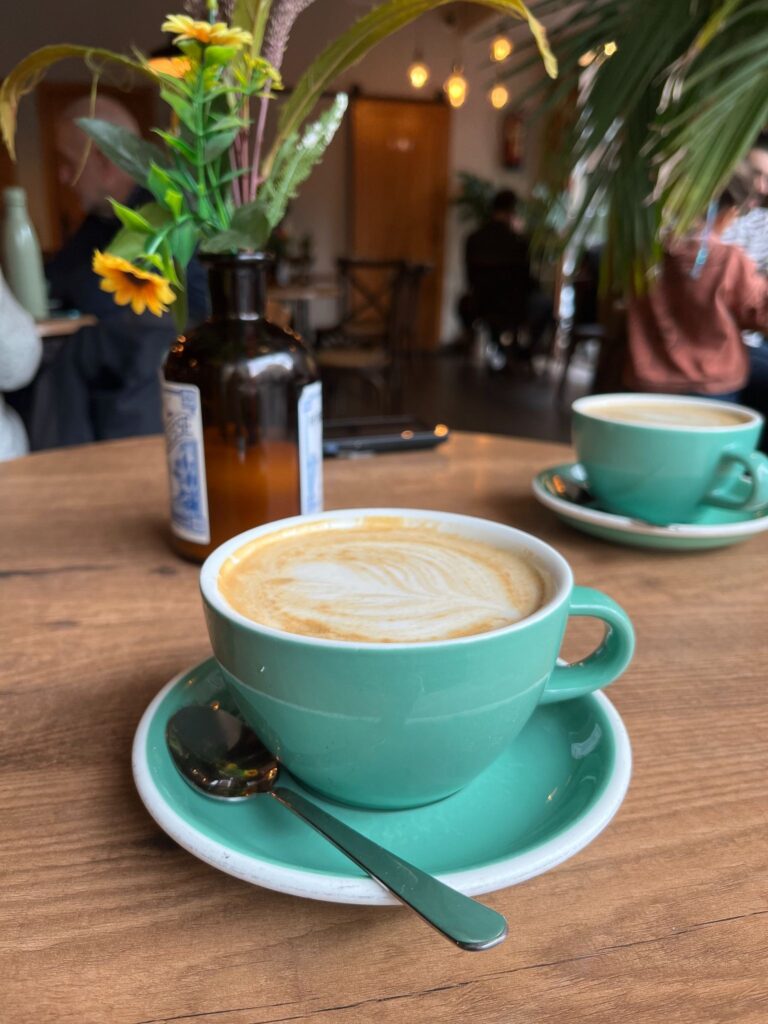
Not too far away, we also went to this coworking space, which was really nice.
We also love Nuna Coffee Shop, and Toma Cafe 2.
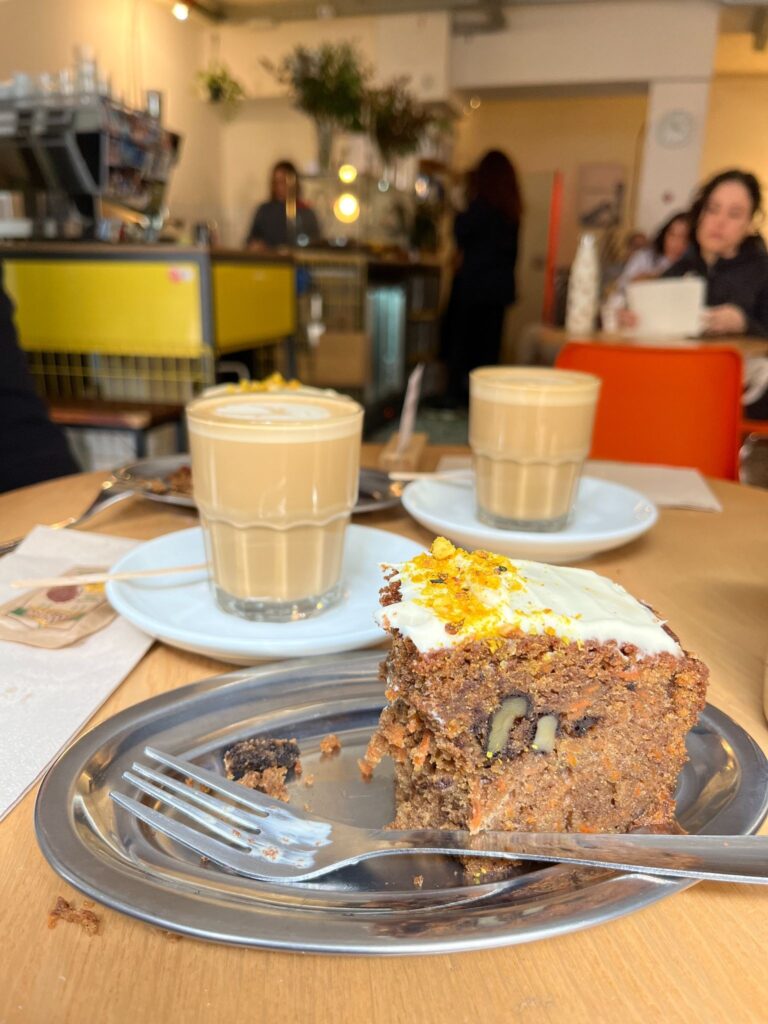
I’ve also had this American pie place and this specialty coffee shop in my to-go list forever, still dying to try it out.
Lavapiés
Lavapiés has a completely different energy — bohemian, a little rough around the edges, and all the more interesting for it.
Secondhand bookshops, record stores, the kind of bars where nobody is trying too hard.
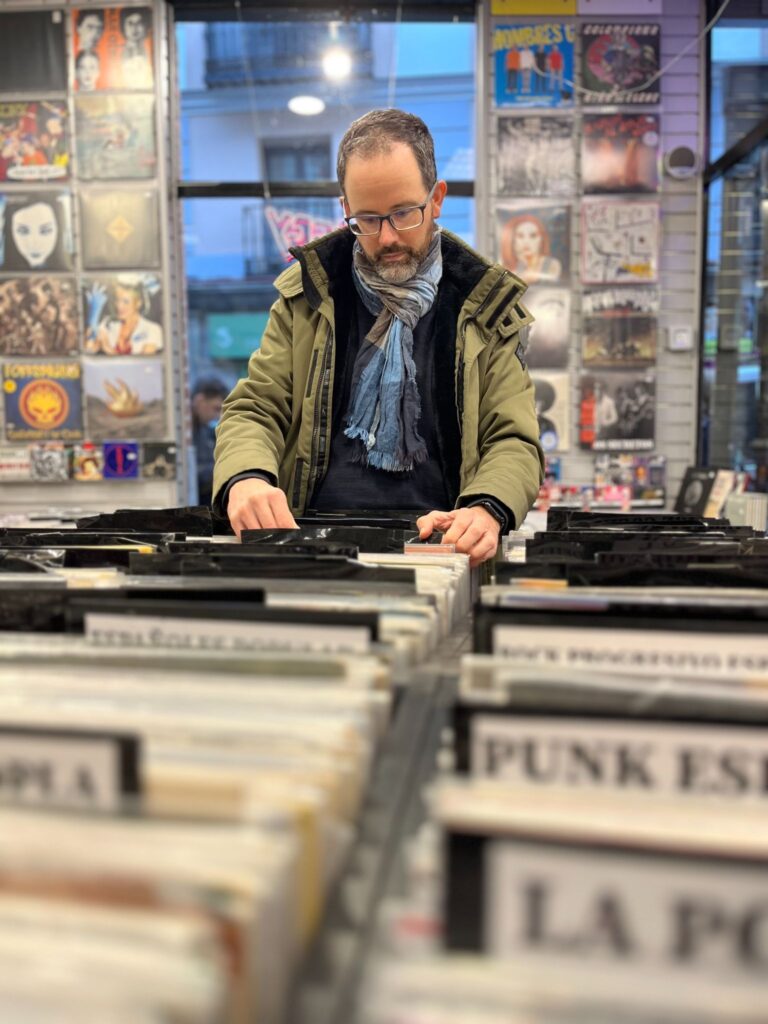
It’s getting more social media attention lately, which is the beginning of the end for any neighbourhood, but for now it still has its soul. It bleeds naturally into La Latina, which is where you want to be on a Sunday (more on that in a minute).
Salamanca
Salamanca is the upscale answer to Chamberí. Calle Serrano runs through the middle of it with the kind of shops that require no justification, and the streets around it have some of the best restaurants in the city. The kind where you don’t feel like you accidentally wandered into a tourist experience, but like you got a reservation somewhere people actually go.
It sits right next to Retiro, which means the afternoon itinerary practically writes itself.
Moncloa
Moncloa is worth a mention for anyone who wants to see a more student, local-university side of the city. It has the kind of casual cafe energy that comes from being surrounded by people who actually live and study there rather than pass through.
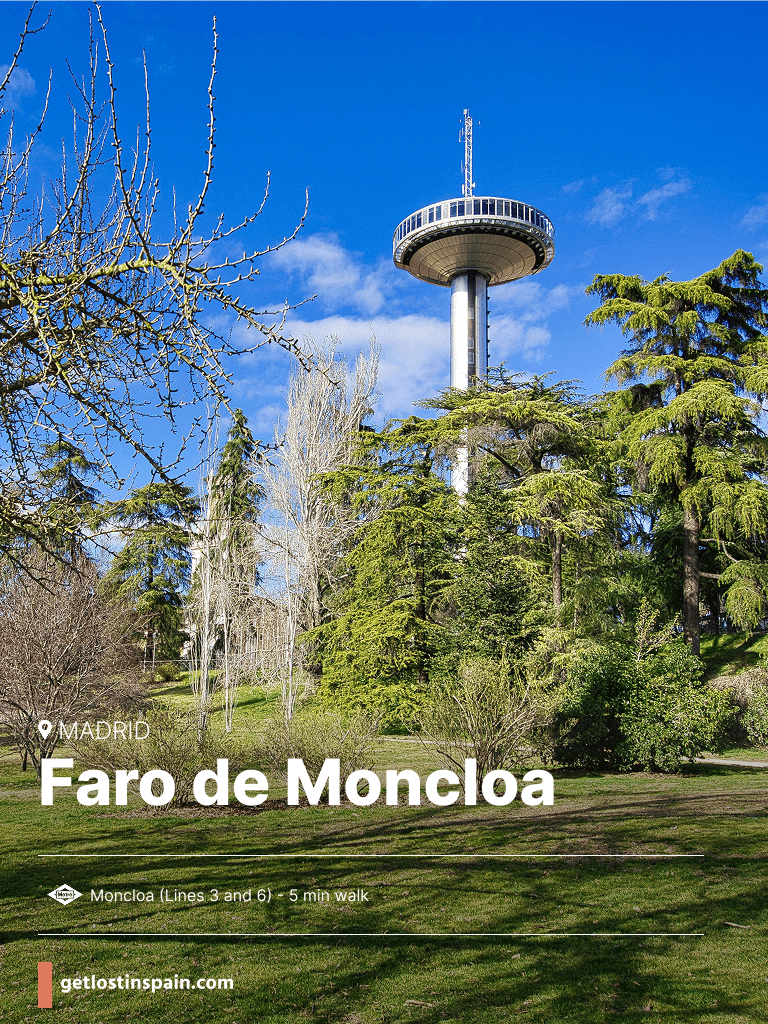
If you want a different perspective of the city, head up to the Faro de Moncloa. It only costs 4 euros to go up to the observation deck of this former transmission tower. If it’s a clear day, it’s absolutely worth the price.
The parks: Retiro and the green Madrid nobody expects
My negative first impression of Madrid was shaped by the fact that it was 105 degrees in the middle of summer. Not a pleasant time to visit a city.
But because of the unrelenting inferno that is July and August, Madrid has developed a network of green space. And the Madrileños know how to use it.
El Retiro
El Retiro is, in practice, the city’s living room. On a Sunday afternoon it’s full of families, people lying on the grass, kids chasing pigeons, couples sharing a picnic lunch in the shade.
It’s not a manicured tourist attraction (except for the rowboats, only tourists row across the lake).
This is really where the locals go to spend time outside.
So, walk through it, grab an ice cream from one of the carts in summer. Grab a book and a blanket, and settle in the shade for a chill afternoon.
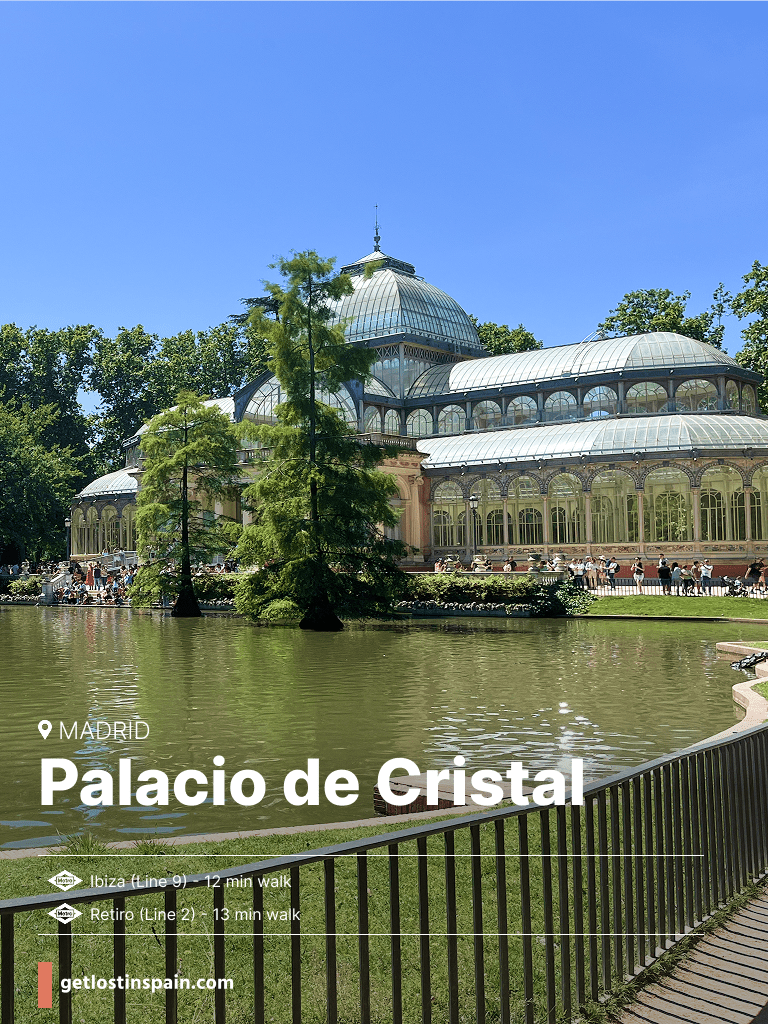
Inside the park, you can also visit the Glass Palace (Palacio de Cristal), a 19th-century glass and iron greenhouse sitting right in the middle of Retiro. It’s free to enter, it usually hosts contemporary art exhibitions. It’s the kind of thing you stumble across and feel like you found a secret even though it’s been there since 1887.
Real Jardín Botánico
The Real Jardín Botánico sits right next to Retiro and is almost always quieter than it deserves to be. If you’re already in the area and want somewhere to exhale for an hour, the vibes are absolutely worth the 4 euro entry fee.
Parque Del Oeste
We visited this park the other day for the first time, and I absolutely fell in love. It’s right next to the area of Moncloa, and feels like the kind of park the locals spend time wandering around or sitting in to read a book and take in some fresh air.
If you’re visiting in May, don’t miss the Rosaleda del Parque Del Oeste, a huge rose garden with hundreds of varieties of roses.
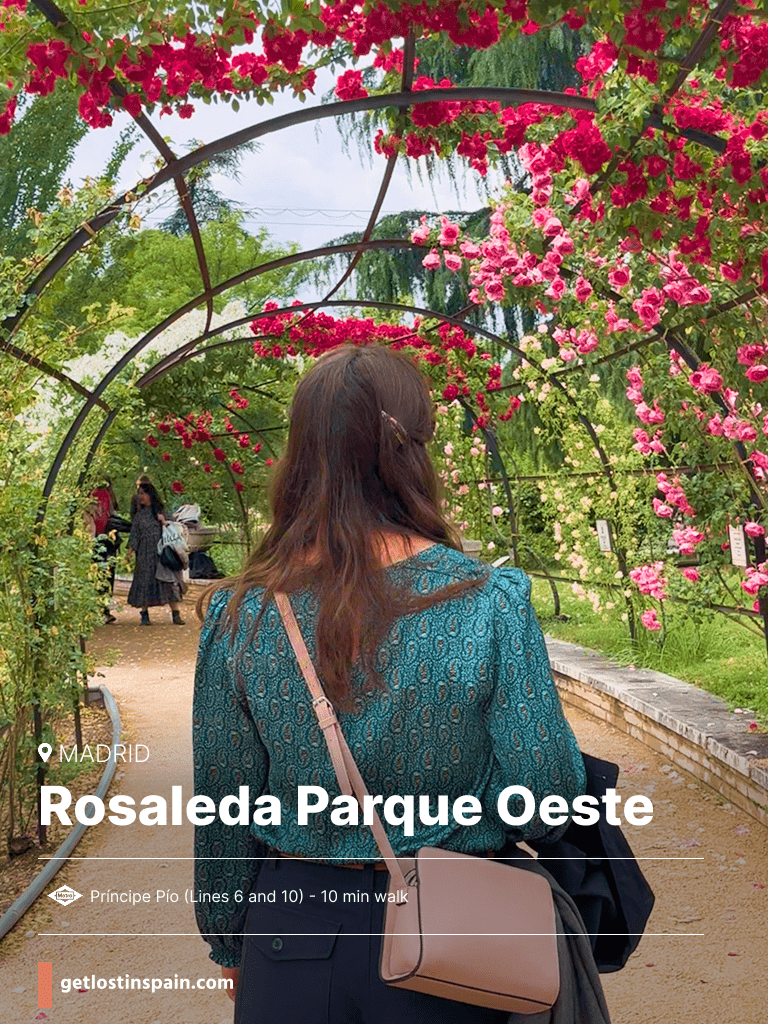
Spring is also the best time to see the wisteria tunnel, towards the far end of the park.
And if you’re visiting in November, be sure to look for the bright yellow ornamental Ginkgo tree!
Parque Juan Carlos I
Parque Juan Carlos I is the one neither of us had seen written about anywhere before we discovered it ourselves. And we both flagged it independently when going through our favourite things about Madrid.
It’s large, it’s beautiful, it’s used almost entirely by people who live nearby.
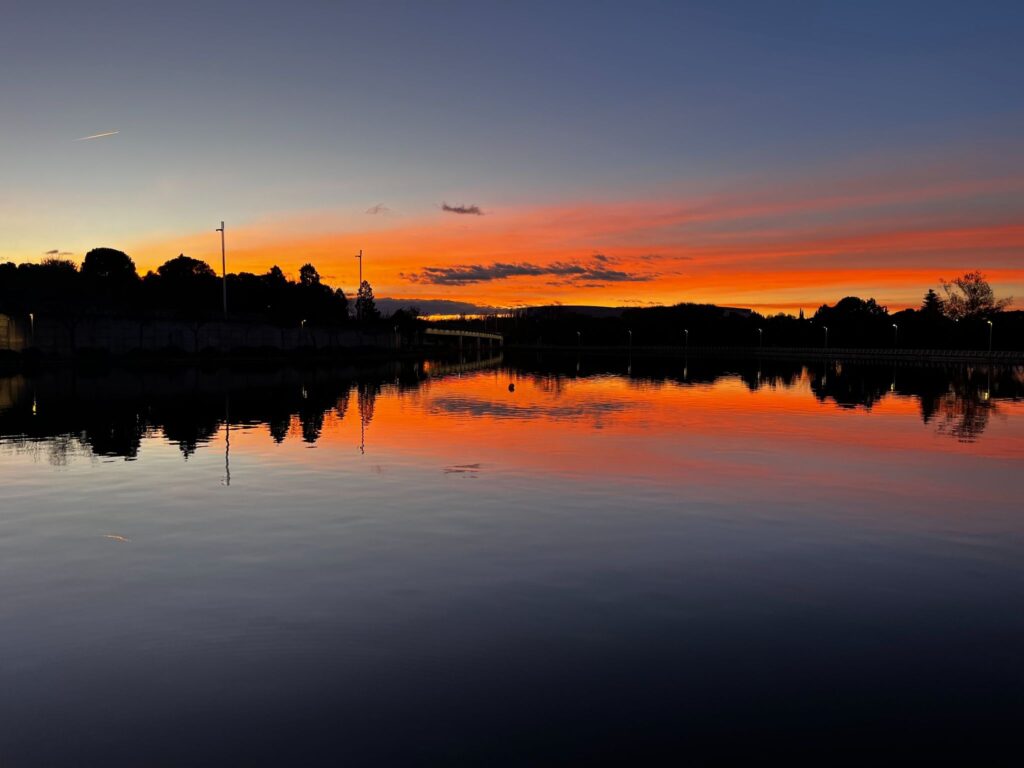
The kind of park where you feel like you found something rather than followed a sign. It’s further from the center, but it’s the park that we wander to when we feel the need to get some fresh air.
Casa de Campo
Casa de Campo is the city’s largest park — a huge green space just west of the center that locals use for cycling, running, and generally escaping the city without leaving it. (Fun fact: it’s five times the size of Central Park!)
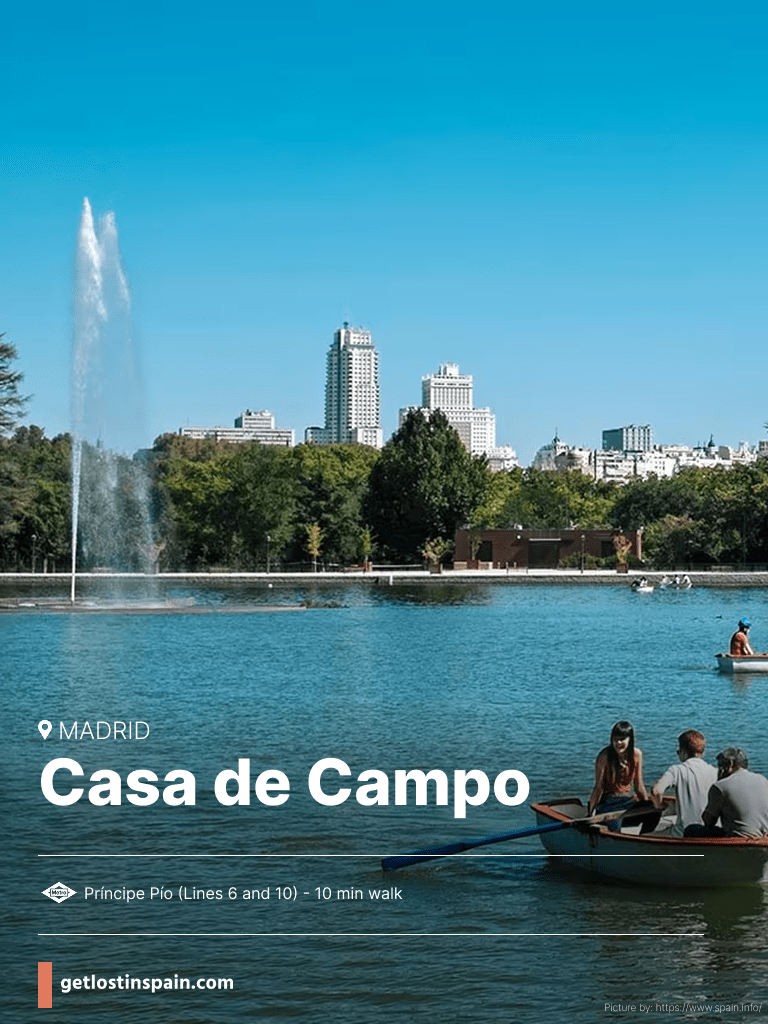
We’ll be honest: we haven’t spent as much time there as we should have. But it keeps coming up whenever we talk about Madrid’s underused spaces, and we’re including it here as a note to ourselves as much as a recommendation.
Manazares River Linear Park
The Manzanares riverside walk (Madrid Río) is another one that doesn’t get the attention it deserves.
A landscaped path along the river toward the south of the city, used by cyclists and runners and people just walking. It’s this kind of infrastructure that makes you think Madrid got something quietly right that other capitals haven’t.
The mercados: What’s worth it and what isn’t
The Spanish mercado is normally an open space with stands for shopping. Your local neighborhood mercado will have fruit and vegetable stands, butcher shops, fish markets, and more.
But there’s another kind of mercado that’s basically an open market for restaurants.
Here’s what you can find in Madrid.
Mercado San Miguel
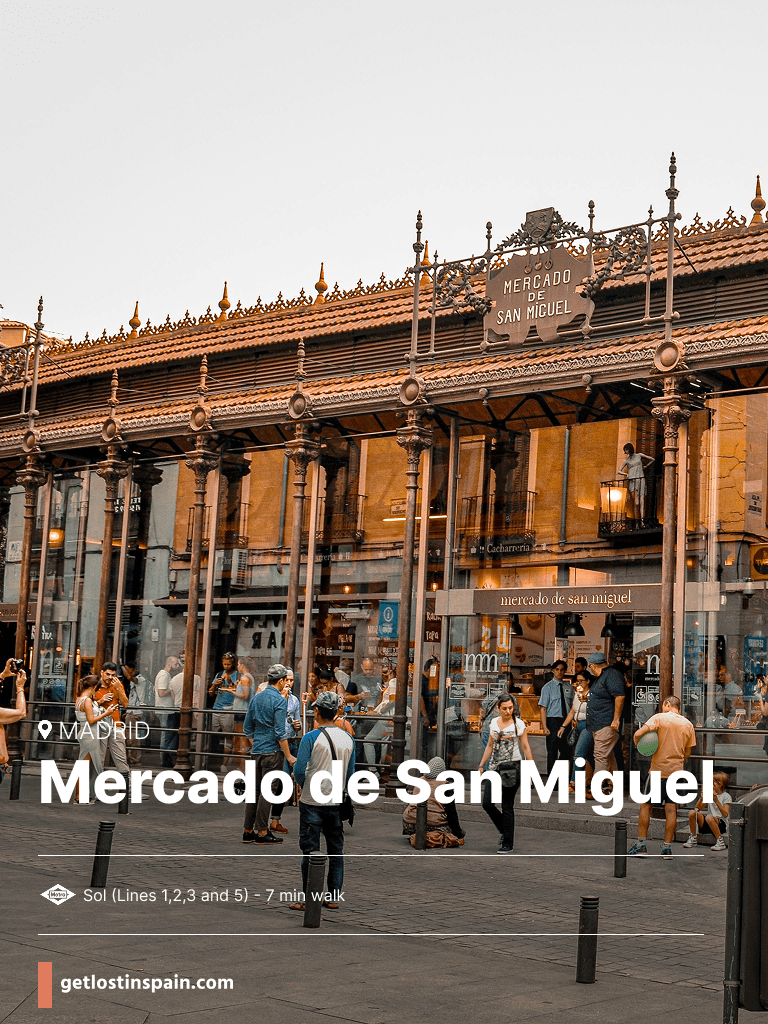
Mercado San Miguel has a reputation for being a tourist trap, and we want to push back on that slightly. The last time we went with family, it was full of Spanish people — with only a few international tourists — eating and drinking and doing exactly what a good market should facilitate.
Is it crowded? Yes.
Is it slightly theatrical? Also yes.
But the atmosphere is genuinely good, the food options are real, and it’s worth an hour of your time. Just don’t go expecting a quiet local lunch. Go expecting a lively, slightly chaotic, delicious Spanish eating experience, and you’ll enjoy it.
Other local markets
If you want something with less performance and more everyday energy, Mercado de San Antón in Chueca is a good alternative. It feels a little bit more like a modern shopping mall, but there are some great food stands and lots of local products to bring home as souvenirs.
Right nearby, you also have Mercado de San Ildefonso, three levels with a great variety of food stalls, and both indoor and outdoor seating available.
If you’re looking for something a little more local, Mercado de la Paz in Salamanca has been around since 1882. It’s more of a working neighbourhood market: fruit, cheese, ham, the stuff people actually buy and take home. A different experience, perfect if you’re looking for something that feels more like where the Madrileños do their weekly shopping.
A local’s ideal Madrid day
If Pep and I were planning a day to visit Madrid, here’s exactly how we’d structure it.
Morning: Start in Chamberí. Walk, find coffee somewhere good, browse a bookstore with no particular agenda.
We’d probably the Re-Read in Chamberi first to find a secondhand book to read. Then hit Nuna Coffee for a cortado and a pastry. This is not a rushed start. The city takes a while to wake up and that’s the point.
Late morning/lunch: Head down toward La Latina and do La Hora del Vermut. If you haven’t encountered this before: vermouth hour is a Saturday and Sunday ritual in Spain, and Madrid does it particularly well in La Latina. It’s not really about the vermouth — it’s about the rhythm of stopping, drinking something at a terrace with olives and maybe a bit of jamón, and letting the morning become the afternoon without any particular hurry.
Afternoon: Lunch in Salamanca — find somewhere on or near Calle Serrano.
(It’s not a typical Spanish place, but I absolutely love Restaurante Bel Mondo, it’s an Italian restaurant with a gorgeous patio and incredibly vibey interior.)
Then walk off lunch through Retiro. Grab an ice cream if it’s summer. Sit on the grass. Let the afternoon go.
Early evening: Wander through the Sabatini Gardens behind the Royal Palace. The light in the late afternoon here is worth the walk.
Evening: The Opera area comes alive in the evening. If you can get tickets to the Teatro Real, do it — it’s one of the great opera houses in Europe and people consistently underestimate it.
For something a little more accessible, check what’s on at Teatro Albéniz — we saw Phantom of the Opera there last year and it was spectacular.
If neither works, this is also where we’d pick up pizza by the slice and walk to Debod for the sunset. Madrid has a strong live music scene — candlelight concerts have been popping up all over the city, and there are often outdoor events in summer worth checking.
Dinner, as a rule, starts at 9pm. If you turn up at 7:30, you’ll be eating alone with the wait staff looking at you with fond confusion. This is not a judgment — it’s just how it works here, and once you accept it, your evenings become significantly better.
Where to stay in Madrid and how to get around
On getting around: the metro is fast and will get you where you’re going. But here’s something we learned more gradually — the bus is often just as fast for certain routes, and it has the significant advantage of letting you see Madrid as you travel through it. For visitors who have a little flexibility, a bus journey is an experience in itself. The system is well set up, very safe, and genuinely used by everyone. Worth trying at least once.
On where to stay: Pep has a strong opinion on this, and he’s right. Do not stay outside the city center to save €30 a night. You’ll spend that money and more on transport, and you’ll lose at least an hour a day getting in and out. Worse, if you end up somewhere that requires the Cercanías (the regional Renfe trains) to reach the center — don’t. Those trains are notoriously unreliable. Delays, cancellations, and the specific kind of frustration that comes from being stuck on a platform when you have somewhere to be. The metro is always the better answer.
Now you’re ready to visit Madrid like a local
Madrid rewards you more the less you treat it like a checklist. The people who come back — who fall a little bit in love with it — are almost never the ones who hit every monument and moved on. They’re the ones who sat in a plaza long enough to stop feeling like tourists. Who ordered vermouth without fully knowing what they were doing. Who ended up in a neighbourhood they didn’t plan to visit and found something they hadn’t expected.
The city still feels local in a way that a lot of European capitals don’t anymore. As Pep puts it: other places have started to feel like theme parks. Madrid hasn’t, quite yet. There are enough real people living real lives here that you can still feel, walking through the right barrio at the right time of day, like you’re somewhere real.
That’s what we keep coming back for.
If you want our curated list of things to do in Madrid — museums, parks, and a few things that didn’t make it into this piece — get our Google Maps list here.