
I didn’t really understand what was around Madrid until we started leaving it.
We moved to the area a couple of years ago, and for the first few months I treated day trips like a checklist — Toledo because everyone says Toledo, Segovia because the aqueduct photos are genuinely incredible, Ávila because it came up on every list I read. I did them in the order the articles told me to. I didn’t know any better.
Here’s the thing nobody tells you: those lists are all identical. Same five places, same order, same three sentences about Roman history, same advice to take the train from Atocha. They were written by people who visited for a long weekend, did the same research I did, and moved on.
Living here is a different experience. You end up at these places in the rain, in August, on a Sunday when everything is closed, and on a random Tuesday in October when you have the whole town basically to yourself. You develop opinions. You find places that don’t appear on any list because there’s no train that goes there.
This is what we’d tell you if you asked us over dinner.
One quick note: Most day-trip articles assume you’re getting everywhere by train, routing everything through Atocha station. That’s fine for some of these. But it limits you more than people realize. A rental car picked up at Atocha costs around €30–40 for a day and opens up a completely different version of the area around Madrid. We’ll flag train vs. car for each place, because the answer actually varies.
1. Segovia: The one that earns it
Segovia is the best day trip from Madrid, hands down. It’s one we’ve done a few times, and I’m absolutely sure we’ll do it again.
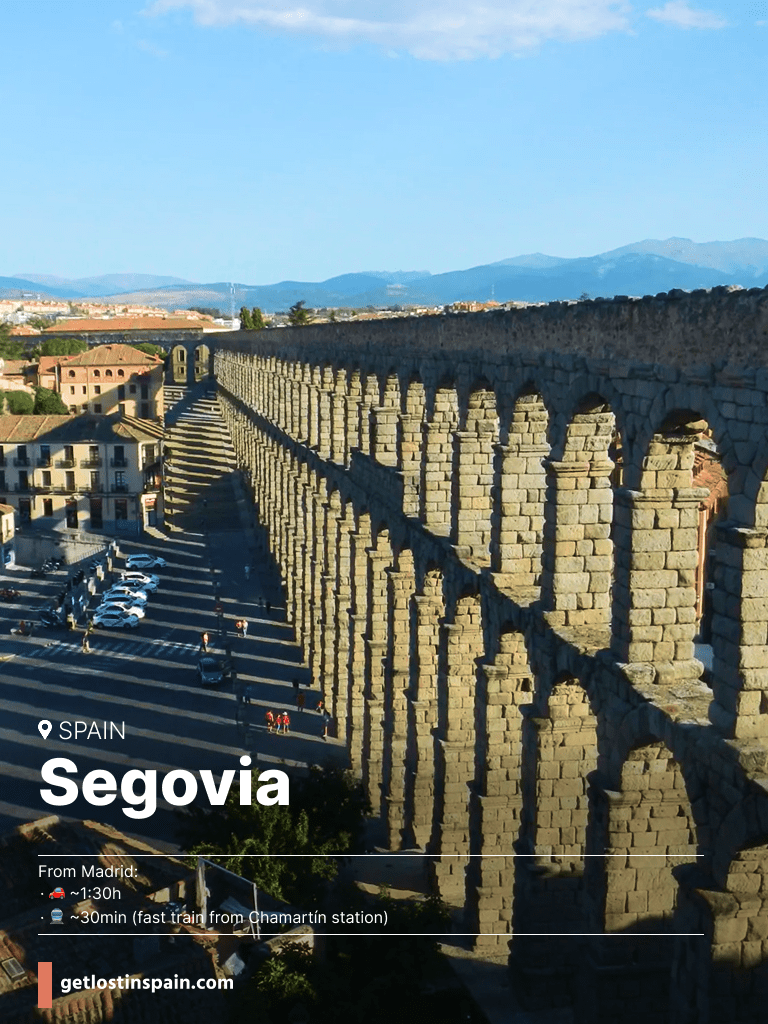
The aqueduct alone would be worth the trip. Standing underneath it for the first time, I genuinely didn’t know what to say — two thousand years old, no mortar holding it together, still standing in the middle of a city where people are having coffee and walking their dogs. The scale of it only makes sense in person.
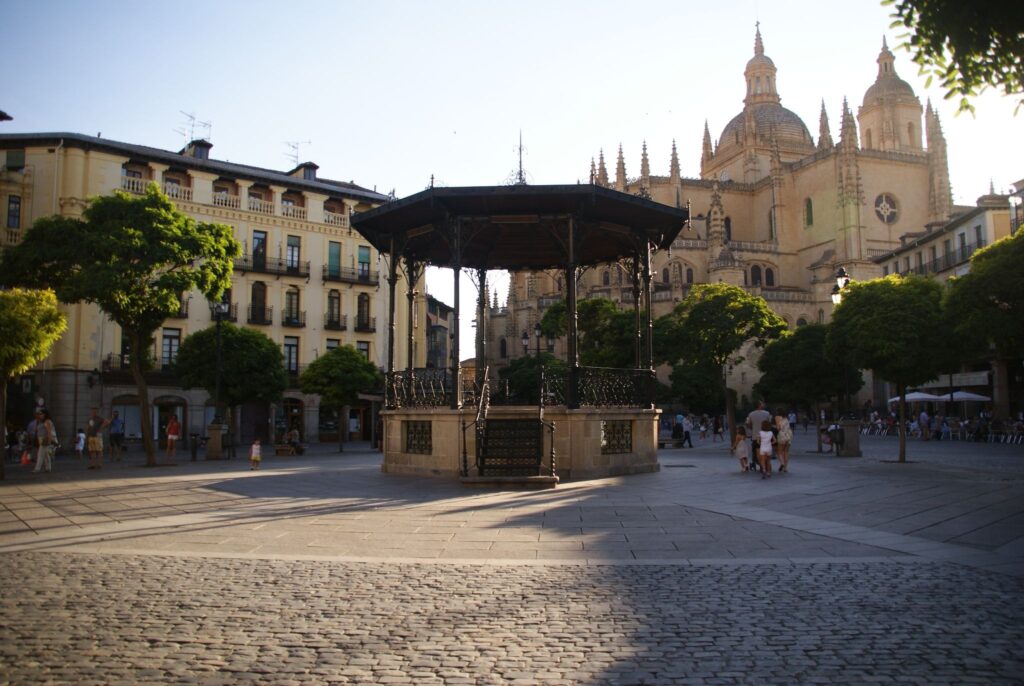
You can also see the Alcazar de Segovia, a restored medieval castle hanging over the cliffside. And just wandering around the city, you’ll also come across beautiful squares and an ornate cathedral.
But here’s what most articles completely miss: the trip itself is part of the experience.
If you drive — and you should drive — take the road up through Navacerrada. You gain altitude quickly. The landscape shifts from the dry plains around Madrid to mountains, forest, views. In winter there’s even snow up there! (For a New England girlie who’s been in Spain for more than a decade, snow is a rare treat.)
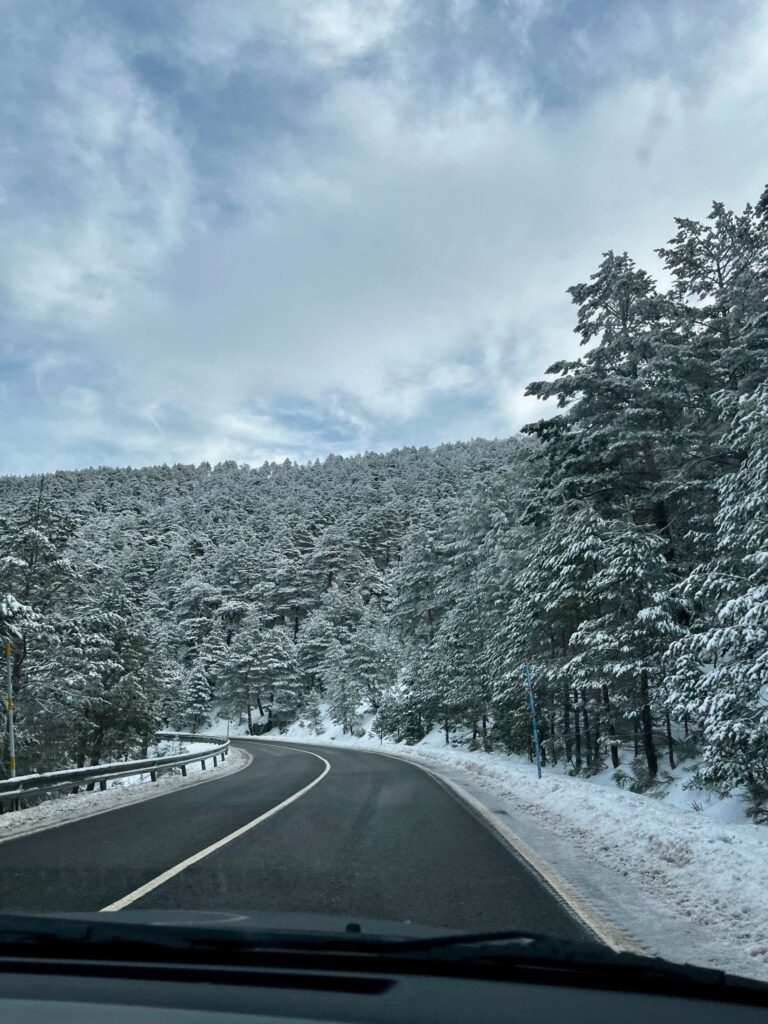
In autumn the light is extraordinary. Pep grew up in Barcelona and he still talks about the first time he drove that road.
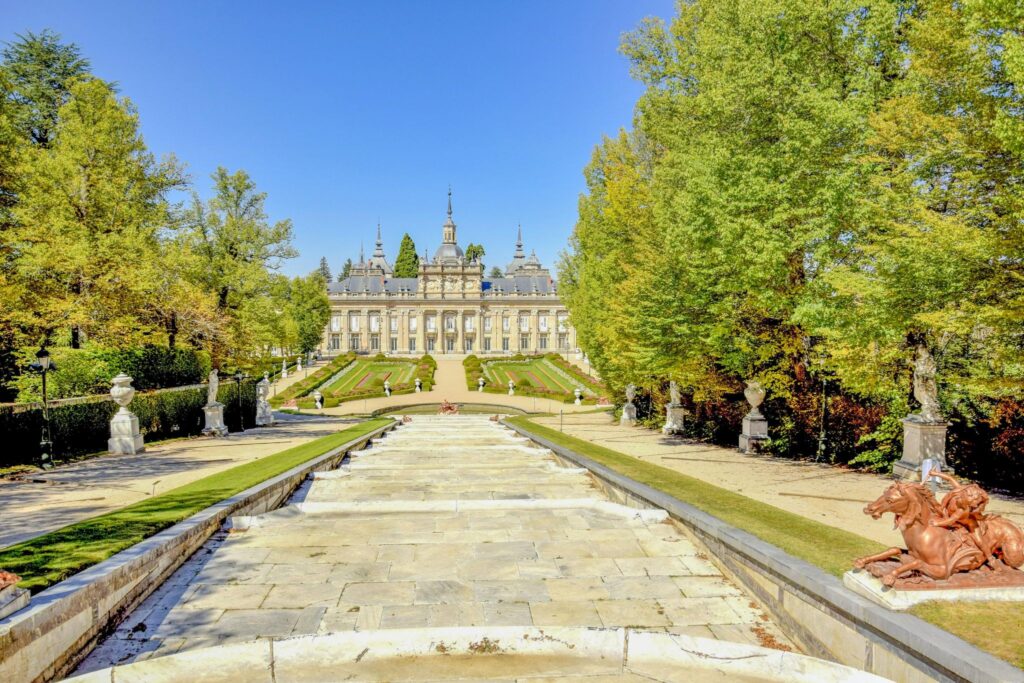
About 13km before you reach Segovia, stop at La Granja de San Ildefonso. It’s a Versailles-style royal palace and gardens that almost nobody outside Spain seems to know about, sitting in a small mountain town surrounded by forest. The gardens in particular are worth an hour of your time. Then continue into Segovia for the aqueduct and the Alcázar, and you’ve done two genuinely incredible places in one day.
For lunch: don’t eat near the aqueduct. The restaurants right on the main tourist drag are fine, but they know you’re there and they price accordingly. Walk a couple of streets back and look for a menu del día around €12–14. Segovia is famous for its cochinillo asado — roasted suckling pig — and if you’re going to try it, try it somewhere that actually wants your repeat business.
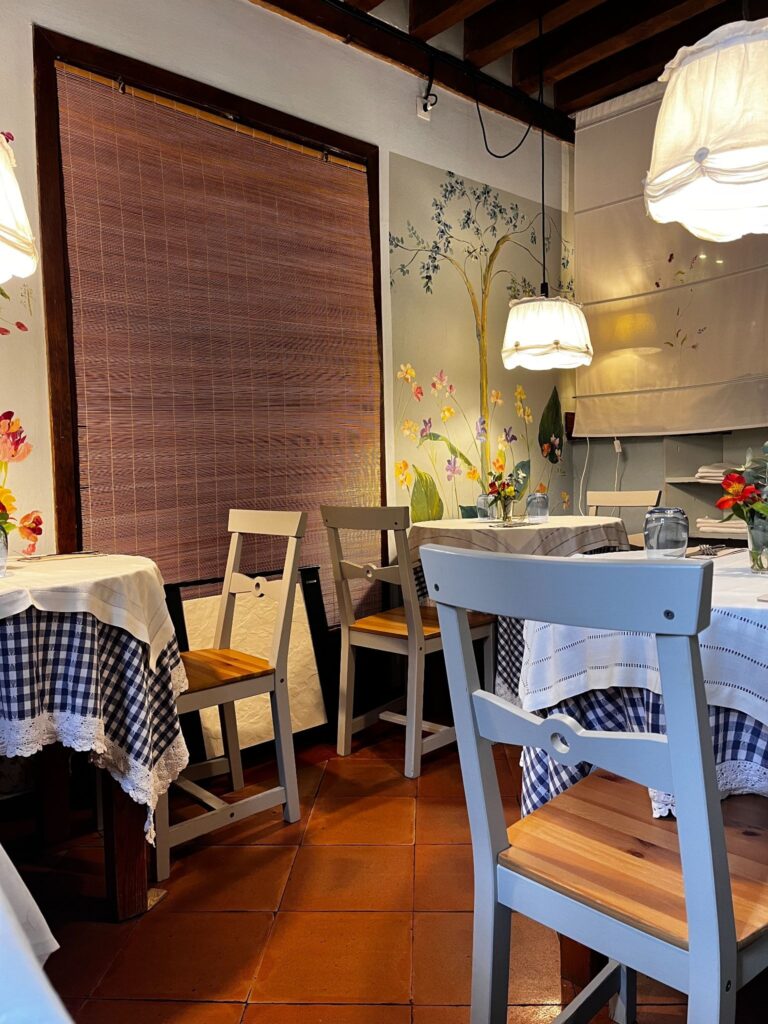
Last time we were there, we ate in a little vegetarian called La Almuzara, it’s cozy with beautiful hand-painted murals on the walls.
Leave Madrid: Around 9am. Drive the Navacerrada route, stop at La Granja, arrive in Segovia mid-morning. Lunch at 2pm. Back in Madrid by 6 or 7pm.
Train or car: Car, strongly. The train gets you there, but you miss La Granja, you miss the mountain road, and you end up in Segovia without a way to get anywhere else. The car makes this a genuinely complete day.
Worth knowing: In winter, check the weather before you drive through Navacerrada — there can be snow on the pass. It’s manageable but worth knowing about. Segovia is also noticeably windier and colder than Madrid in winter, which is either atmospheric or miserable depending on your disposition.
2. Ávila: Better than you expect
Both of us were surprised by Ávila. I think I’d seen so many photos of the walls that I assumed the reality would be smaller than the image. It isn’t.
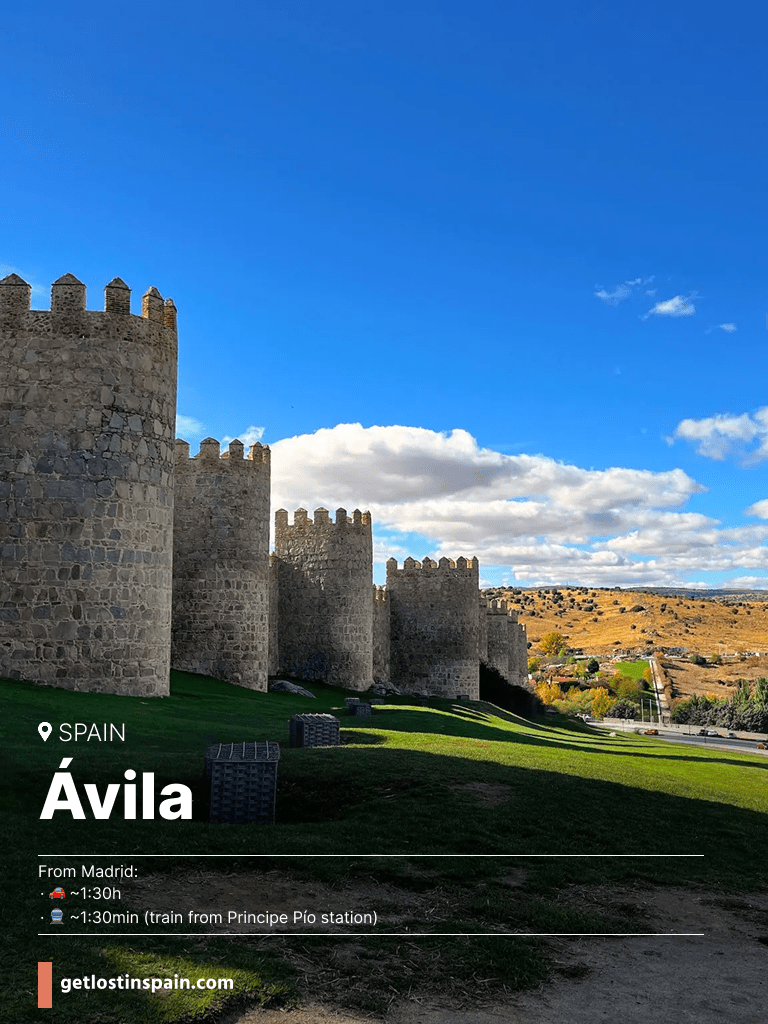
The medieval walls that wrap around the city are genuinely one of the most impressive things I’ve seen in Spain, and I live here. They’re enormous. They’ve been standing since around 1100. You can walk along the top of them, which is how you should see them — not from the outside looking in, but from up there looking back over the town.
Ávila has a different energy from Segovia. It’s quieter, smaller, a bit more local-feeling.
Segovia on a summer weekend can get crowded in the way tourist places do. Ávila absorbs visitors better. If you want a slower day, this is the one.
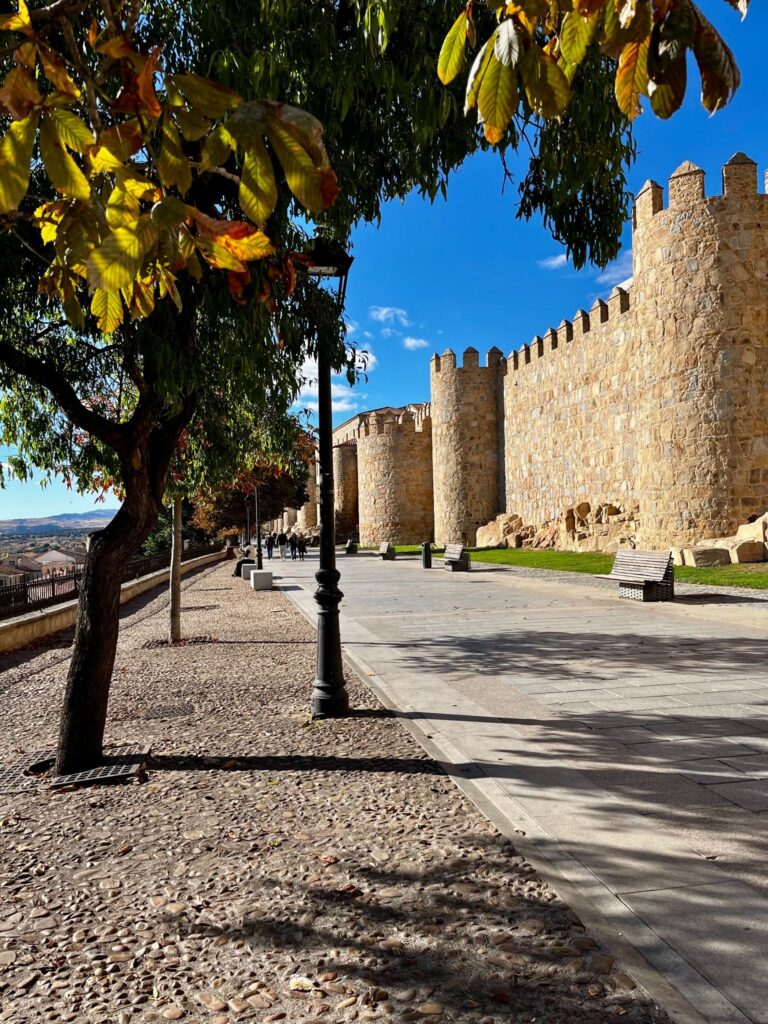
The honest note: there’s less to fill a full day here than in Segovia. If you’re the kind of person who needs to be doing something every hour, you might find yourself done by 3pm and wondering what’s next. We’d either treat it as a deliberately relaxed day — walls in the morning, long lunch, wander in the afternoon — or combine it with something nearby.
Train or car: Either works. There is a train, and it’s a reasonable option if you don’t want to drive. But having the car gives you flexibility if you want to explore the surrounding area or combine it with something else.
Worth knowing: We went once on a Sunday in summer and found more things closed than we expected. Shops in particular. Outside of Madrid, Sunday closures are real — more on this later.
3. Toledo: Overrated, but here’s how to do it right
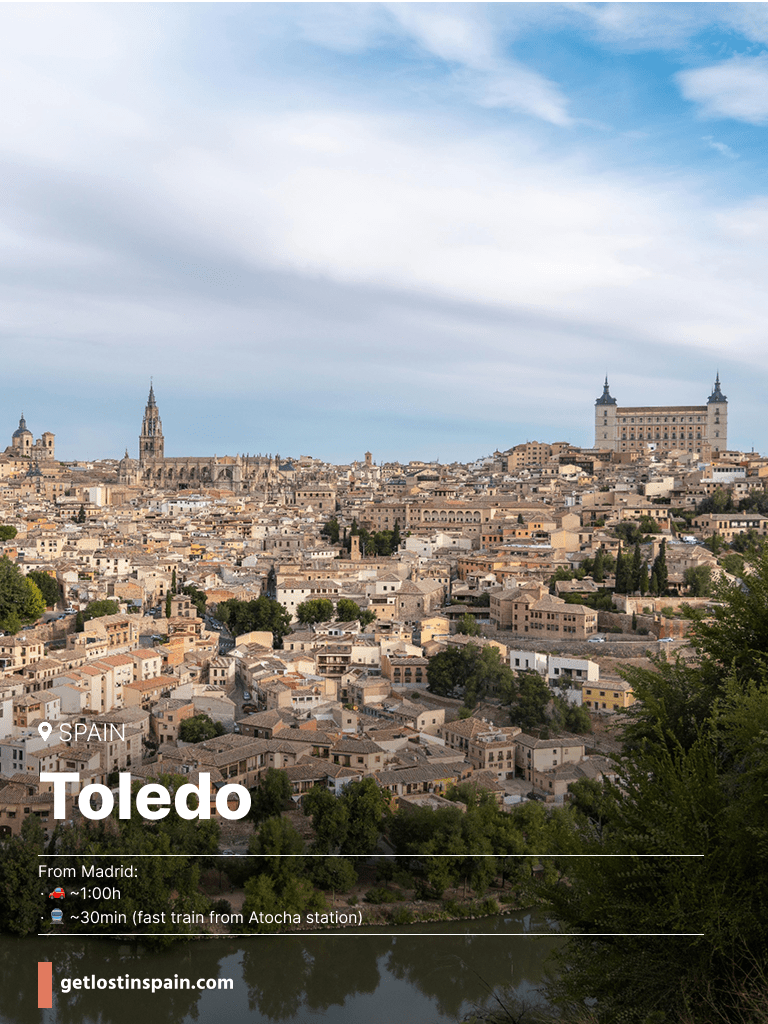
We’ll say it plainly: Toledo is the weakest of the three. After Segovia and Ávila, it’s a bit of a letdown.
It’s not that Toledo is bad — it’s historic, genuinely beautiful in photographs, and the medieval streets are atmospheric.
The problem is that it’s small, it can feel quite crowded, and the version of it you get on a day trip is largely a tourist experience rather than a Spanish one. Pep points out that Madrileños with 10 years in the city have usually been once and don’t go back. That tells you something.
If you can only do two of the three classics, skip Toledo.
If you go anyway — and there are reasons to — a few things are worth knowing.
Don’t go in summer. Toledo is a hilltop walled city made almost entirely of stone, and in July and August it traps heat in a way that makes it genuinely unpleasant. We went in summer once and the heat was the main thing I remember about it.
The Mirador del Valle is worth the effort. Every article mentions this viewpoint, and they’re right to. The view back over Toledo from across the river is the image you’ve seen in photos, and it’s better in person. Go late in the day if you can.
The marzipan is the real deal. Toledo has been making it since medieval times and it’s available everywhere — but if you want the good version, it’s sold directly from convents, still made by the nuns who live there. There are a couple in the old town. You ring the doorbell, a nun passes it through a revolving wooden door, and you end up with a small bag of something genuinely wonderful. Worth seeking out.
The one exception to the “skip it” advice: Toledo at night, or staying over. Once the day-trip crowd leaves, the town becomes something else entirely. If you can time an evening there — or stay one night — it’s worth considering.
Train or car: The train is actually fine here. The AVE from Atocha takes about 30 minutes and the station is convenient. This is one case where leaving the car at home makes sense.
4. Hoces del Duratón: The one nobody talks about
We have been to Hoces del Duratón four or five times. Maybe more.
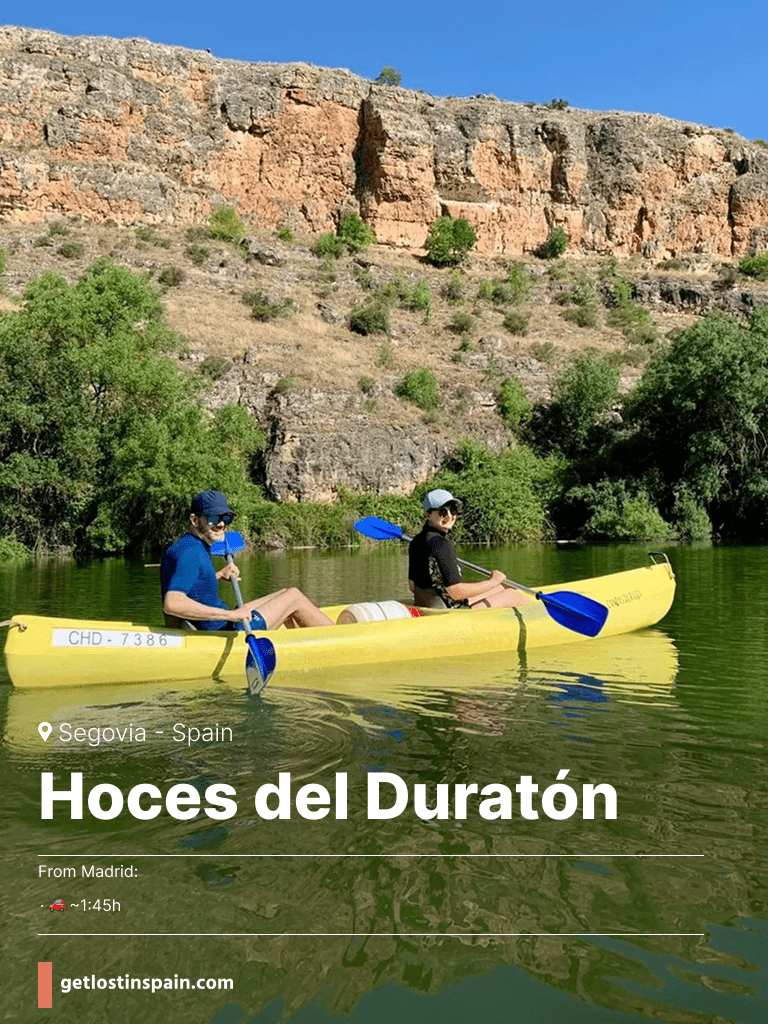
It’s a protected natural park about 90 minutes from Madrid, built around a dramatic river gorge near the town of Sepúlveda. The Duratón river has carved its way through the landscape over thousands of years, creating canyon walls that drop sharply into clear green water.
Griffon vultures nest in the cliffs — there are hundreds of them — and on a summer afternoon you can be floating in a kayak at the bottom of a canyon with these enormous birds circling silently overhead, and it feels almost surreal.
In a city that reaches 38°C in July, the combination of water, stone walls, and shade is *chef’s kiss*.
You can rent kayaks and stand-up paddleboards at the gorge. It’s not expensive. It doesn’t require any particular skill or experience. You just spend a few hours on the water and wonder why you haven’t been doing this every summer.
The town of Sepúlveda, right next to the park, is charming in the understated way that small Castilian towns often are — a plaza, some good restaurants, not a tourist shop in sight. Worth stopping for lunch.
Train or car: Car only. There’s no practical public transport option to the gorge. This is exactly the kind of place you miss if you’re navigating entirely by train from Atocha.
Best time to go: Late spring through early autumn. Summer is hot, but the water fixes that. It’s one of the best things to do near Madrid in July or August precisely because it gives you somewhere to actually cool down.
5. Pedraza: The medieval town that actually feels medieval
We ended up in Pedraza by accident after a kayak day at Hoces del Duratón, and it’s become one of our regular stops.
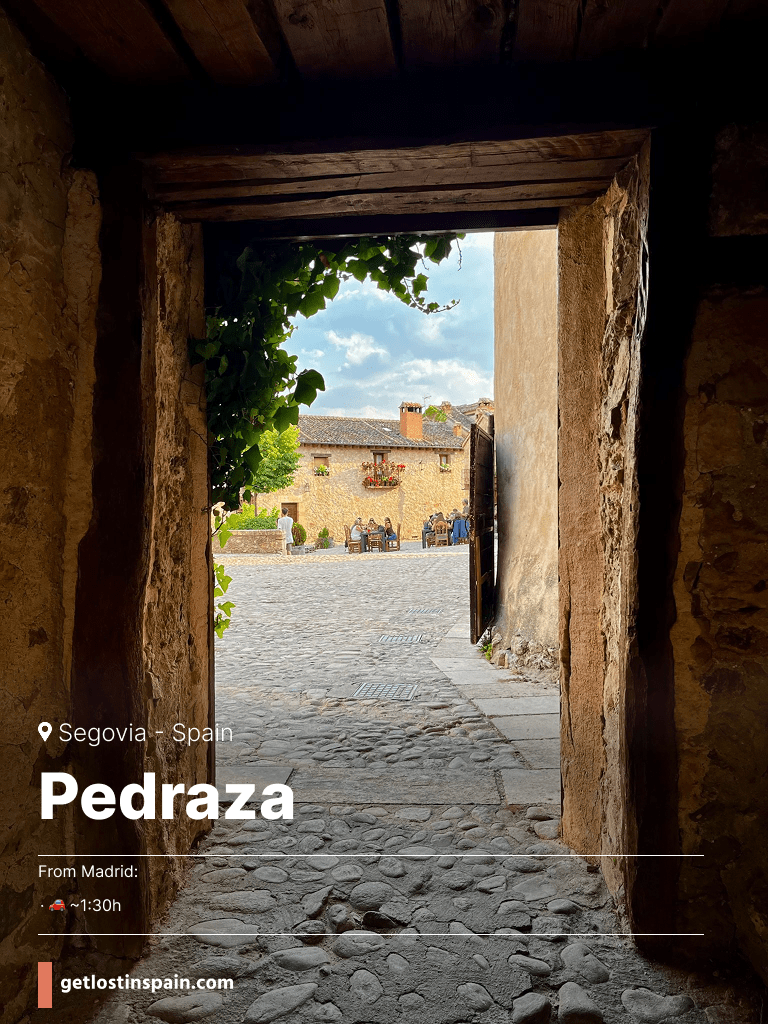
It’s a small walled village about 90 minutes from Madrid — the kind of place where the streets are completely cobblestoned, no cars are allowed inside the walls, and there’s a castle at one end that looks like it was put there as a prop but has actually been standing since the 13th century. Restaurants operate from under stone arches. In winter they light fires.
You can see the whole village in a couple of hours, which makes it perfect as a second stop on a day that starts somewhere else — pair it with Hoces del Duratón, or with the Navacerrada area on the way back from Segovia.
It doesn’t appear on most day-trip lists because there’s no train. That’s not a coincidence. It’s also why it still feels like the most honest version of itself.
Train or car: Car only. This is the clearest example of what you can’t access if you’re routing everything through public transport.
6. Aranjuez: The underrated one closer to home
Every day-trip list mentions Aranjuez, usually buried somewhere near the bottom. We think it deserves better.
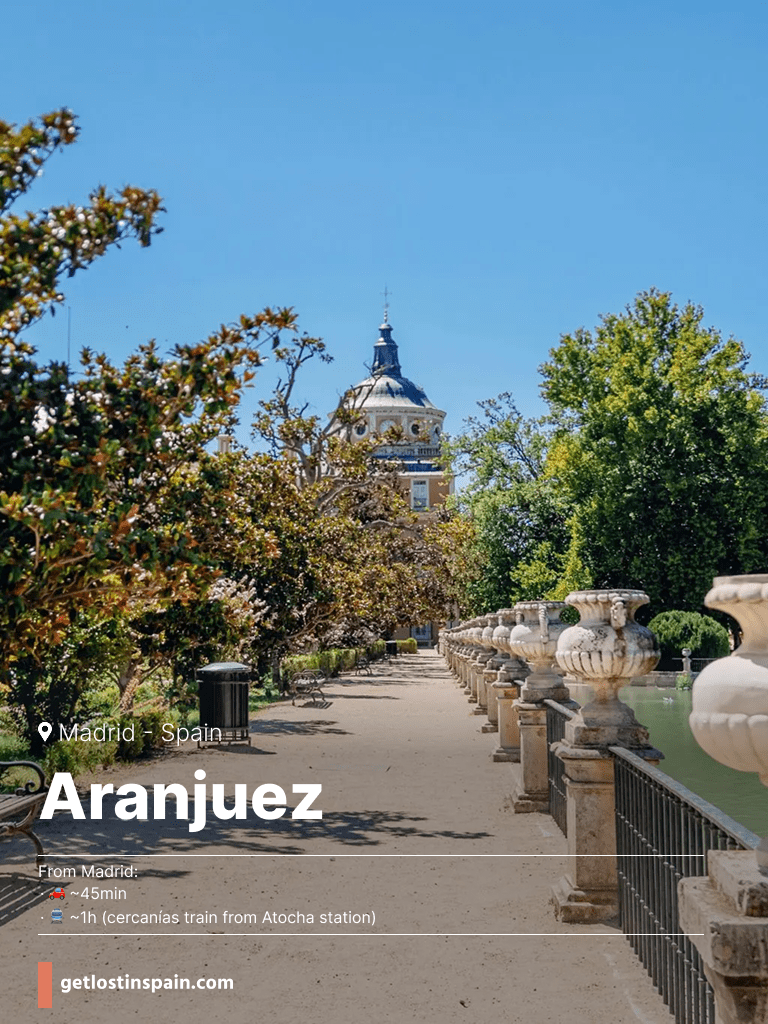
It’s 45 minutes from Madrid on the Cercanías commuter train — the C3 from Atocha, runs constantly, costs almost nothing. The Royal Palace is genuinely impressive. The gardens, modelled loosely on Versailles, are beautiful and usually quieter than they should be. There’s a river.
But the real reason to go is the pace of the place. Aranjuez feels like a town that still functions for the people who live there rather than for the people who visit. Madrileños actually come here — you can tell the difference between a place that has a local following and a place that runs entirely on tourism.
Here’s something almost nobody mentions: when you get off the train, don’t take the bus into town. Walk. There’s a long, tree-lined avenue from the station to the palace that takes about 15 minutes on foot and is genuinely lovely. It’s the kind of walk that puts you in the right mood for the rest of the day.
Train or car: The train is fine here, and arguably better. The walk from the station is part of the experience, and parking near the palace can be annoying on weekends.
7. Brihuega: Lavender fields, but only in early summer
This one has a specific window: late June to mid-July. Come at the right time and you’ll find yourself standing in fields of purple lavender stretching to the horizon, about 90 minutes from the center of Madrid, in a landscape that looks nothing like what you’d expect to find this close to the capital.

Come outside that window and you’ll find brown fields and a small confused town wondering why you’re there.
The timing is real — Spanish lavender farms are pretty active on Instagram through the spring and you can track the bloom before you commit to the trip. Don’t guess.
The town itself — Brihuega, in Guadalajara province — is worth the hour or so it takes to wander around. There’s a ruined Arab fortress, a pleasant plaza, and a few good places to eat. It doesn’t need to be more than it is.
Again, this option probably won’t take you an entire day. So, plan half a day or a combine it with something else.
Train or car: Car only.
Best time to go: Late June to mid-July. That’s it.
Worth knowing: Wear white (trust me). Not only is it amazing for pictures, but apparently it also helps keep the bees away!
A few honorable mentions
These didn’t make the main list because they’re slightly different in character — shorter, or more specific, or places we haven’t explored as thoroughly as the ones above. But they’re genuinely worth knowing about.
Alcalá de Henares
For us, this doesn’t count as a day trip since we live here! But if you haven’t been: the historic center is beautiful, very classically Castilian, and home to one of the oldest universities in Europe.
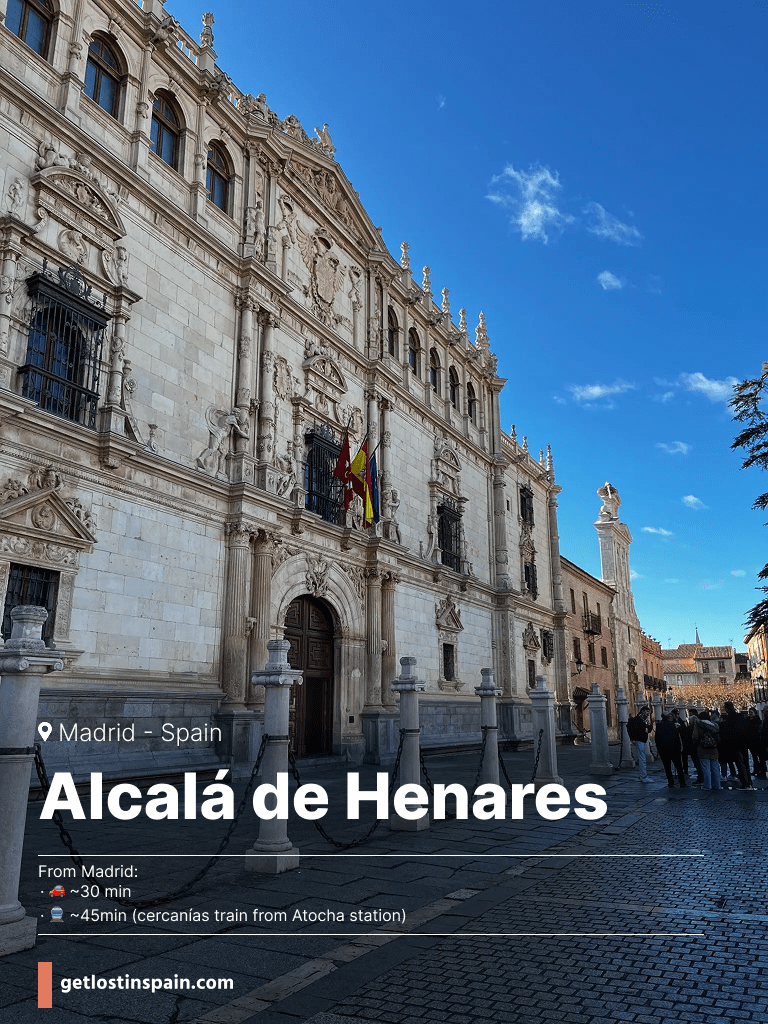
Cervantes was born here, (which the town will remind you of at every opportunity. You can even tour his house). It’s probably a half-day rather than a full one — take the train from Atocha (40 minutes, Cercanías C-2 or C-7), wander the colonnaded Calle Mayor, have a good meal, come back. Good for an afternoon if you have one free.
El Pardo
A royal palace and hunting ground about 15 minutes from the center of Madrid. What makes it worth going is the riverside walk — a long, green, genuinely quiet path along the river that feels surprisingly remote given how close it is to the city.
We did this on a weekday and had most of it to ourselves. A good one if you want to be outside without committing to a 90-minute drive.
San Lorenzo El Escorial
A 16th-century monastery and royal palace in the foothills of the Sierra de Guadarrama, about 50km from Madrid.
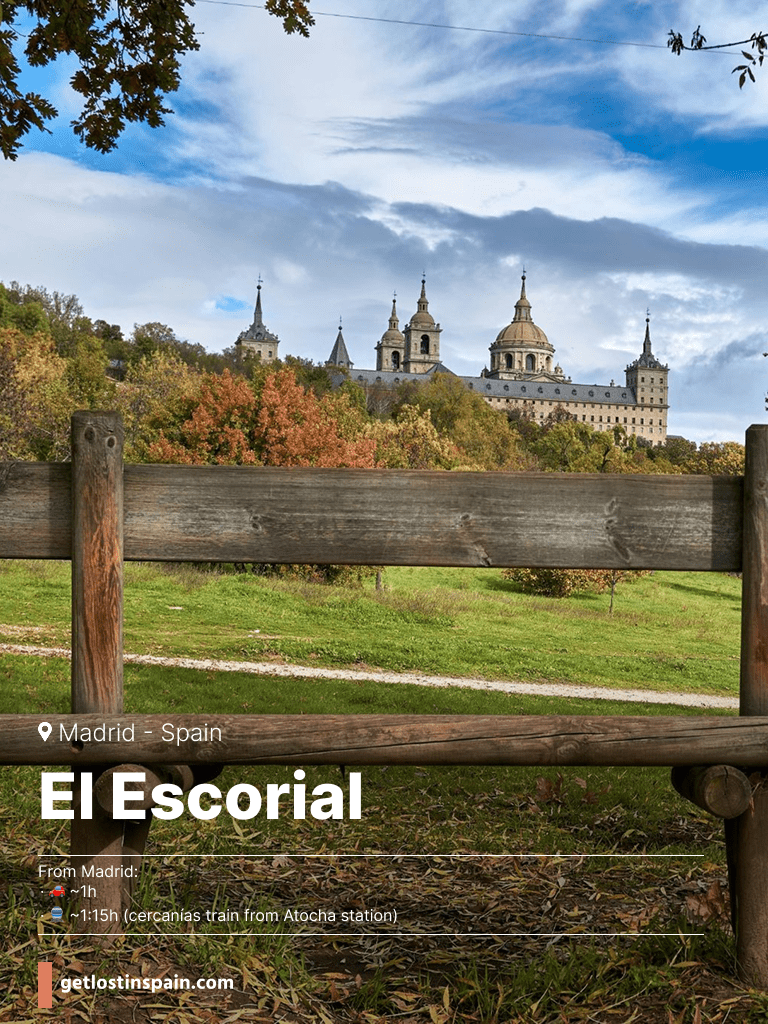
The building of the old monastery is incredible to look at. Plus, it’s surrounded by mountains and forest in a way that genuinely surprises you if you’re expecting the flat plains around the capital. There are even some good hiking trails in the area if you want to combine architecture with being outdoors.
I highly recommend visiting in late fall, you’ll get the most out of the season with the colors changing and stable weather.
Accessible by train (Cercanías C-8) or by car.
When planning a day trip from Madrid, here’s a few things to remember
Some places listed elsewhere as day trips really aren’t.
You’ll see articles that suggest Sevilla, Valencia, or even Granada as day trips from Madrid.
The AVE gets you to some of them in 2–3 hours, which sounds manageable until you factor in getting to Atocha first, waiting for your train, getting from the station to the city center at the other end, and then doing the whole thing in reverse before 11pm.
You haven’t seen Sevilla — you’ve been to Sevilla’s train station and its immediate surroundings.
All of these cities deserve at least two days. Don’t do this to them (or yourself).
The Sunday problem.
Madrid is open on Sundays. The towns around it are often not. Shops close. Some restaurants operate reduced hours. Smaller attractions may be shut. This is not a quirk — it’s just how Spain works outside the capital. We learned this in Ávila when we arrived on a Sunday afternoon and found most of the shopping street closed. Check before you go, and if you’re going on a Sunday, plan to be in a restaurant by 2pm rather than discovering the problem at 2pm.
The lunch hour is not optional.
In smaller towns, 2–4pm is genuinely slow. Not “some shops close” slow — more like the town pauses.
The correct response is to be sitting somewhere yourself, eating a menú del día (a multi-course set lunch that typically runs €12–15 and is one of the better things about being in Spain).
Don’t be in a hurry to go anywhere. Nobody is going to rush you out of a restaurant here. That’s the point.
Heat and seasons.
Summer around Madrid is hot. Toledo is particularly brutal because it’s a hilltop city enclosed by stone walls that trap heat — avoid it in July and August if you can. Segovia and Ávila handle summer better. Hoces del Duratón is actively the right call in summer because the water solves the problem. Spring and autumn are genuinely the best time to be doing any of this.
The version of this that stays with you
The best day trip we’ve done wasn’t a single destination. It was leaving Madrid at 9am, driving up through Navacerrada with the windows down and the mountains appearing through the pines, stopping at La Granja to walk through the gardens before the tour groups arrived, eating cochinillo at a table in Segovia with no tourists at the surrounding tables, and being home by 7pm.
The point isn’t to add more places to a list. It’s to get into the part of Spain that doesn’t try very hard to impress you — the part that’s just been there for a thousand years and isn’t particularly concerned with whether you appreciate it.
That part is right there. An hour from Madrid in almost any direction.
Most people visiting the city have no idea.
Planning a few days in Madrid itself before you head out? Read our guide to what we actually do — and what we’d skip — in the city.
And if you want to be the first to know when we write about the rest of this area — Navacerrada, the Sierra de Guadarrama, the towns nobody goes to — sign up for the newsletter. We’ll tell you the things that didn’t fit in this article.